Revival meeting: Gillian Welch in 1997

gillian-welch-boots-no-1-0

The release of Boots No. 1: The Official Revival Bootleg prompts me to share this MOJO interview with Welch and David Rawlings from December 1997, plus (below) an Uncut review of the very fine Soul Journey from August 2003…

DETACH YOURSELF for a moment and this here’s a pretty rum scene. A raw, callow-looking couple straight out of a Depression-era Walker Evans pic are singing plaintive mountain songs in a bar in, of all places, Chicago – not commonly renowned as a bluegrass town, to my knowledge, even if it is home to Freakwater. They’re doing it, moreover, to the wild applause of the sort of folks who wear combat boots and dye their hair, most of whom seem to know these songs – the song about the V-8, the song about “the dead baby” – by heart and only want more of what the lanky girl and bony boy do so very, very well.

Not only do the couple’s voices blend superbly – the girl’s stark, vibratoless alto shadowed by the boy’s soft baritone – but their guitars, a 1935 Epiphone for the boy and a big reddish-brown Guild for the girl, also intertwine with unearthly neatness. They sing beautiful, chilling songs like ‘By The Mark’ and ‘Orphan Girl’ and ‘One More Dollar’ and the place is simply transfixed. They rev it up a little for ‘Pass You By’ and ‘Tear My Stillhouse Down’ and the effect is just the same.

The girl is called Gillian Welch, the boy David Rawlings, and together they’re responsible, by almost universal critical consent, for the outstanding country debut of 1996. Produced in Los Angeles by T-Bone Burnett, Revival features legends like James Burton and Jim Keltner, but mostly it is just Gillian (hard G) and David, performing quietly together as they do onstage tonight. Since its release last spring, Revival has garnered the duo across-the-board adulation and taken them all the way from the Bluebird Cafe in Nashville, where they live, to the Purcell Room in London. At a time when the profile of bluegrass in America has never been higher – when an Alison Krauss can make the Top 20 Album chart and you can’t move for summer bluegrass festivals – they are becoming one very hot property.

The pair first met in 1989 while auditioning for a country band at Boston’s prestigious Berklee College of Music, where both were studying. Welch was the adopted daughter of Hollywood television composers, Rawlings a Rhode Island native who’d come comparatively late to the guitar in 1986.

“We both passed the audition,” recalls Welch. “Mainly we played Bob Wills and Buck Owens stuff in the band, but sometimes we’d play a little recreational bluegrass. It wasn’t until later that Dave and I first sang together, just the two of us. We started doing traditional tunes and realised that our voices together sounded okay. Especially as it seems to be a little less common in bluegrass to have the lead on top with a baritone harmony below – you’re a little more used to hearing lead with a tenor harmony on top. It meant that hard as we tried to copy a Stanley Brothers song, it always ended up sounding different.”

A move to Nashville in 1993 was based on the pragmatic decision to reside in a music town. “I’d lived in the Bay Area,” Welch notes, “so I had a feel for what it would be like to stay in a non-industry city and try to come up through the local scene. I’m definitely glad we went to Nashville. It’s been a good place for us.”

The first break came with a writing deal at Almo-Irving, leading in turn to Welch’s signing to Almo Sounds, the post-A&M label formed by Herb Alpert and Jerry Moss in 1994. (Welch signed as a solo act for the simple reason that it’s a good deal harder to market a duo.)

“I did an in-person audition for Jerry Moss in the summer of ‘94,” says Welch. “Flew to LA and sat in his office and sang. I knew things were going well when he was singing along to Orphan Girl. And then we made the record about a year later. Didn’t meet Herb until a bit further down the road, although he and Jerry came to see us play at this real neighbourhoody bluegrass dive in Nashville called the Station Inn.”

The latter venue was also where T-Bone Burnett caught the duo the first time, offering his services as a producer should they ever need one. “We talked to nine other producers after we signed our deal,” says Rawlings, “but we kept coming back to T-Bone, because that was who we felt the most in tune with.”

In the end there wasn’t a whole lot of production to be done on the record, though the duo gives full credit to Burnett for adding just enough contemporary feel to the arrangements to rescue it from the cobwebs of Carter Family arcana. The dragging rockabilly groove of ‘Pass You By’ and the spooky Patsy Cline-meets-Cowboy-Junkies feel of ‘Paper Wings’ are certainly two of the album’s highlights.

“We started with the arrangements Dave and I had been playing and recording them live to mono,” says Welch. “Did about a week of that, and then brought in Jim Keltner and [bassist] Armando Campean, plus James Burton on… other stringed things! I feel like T-Bone kind of pushed us to experiment somewhat. We tried some wackier stuff, and then most of it got pared down again.”

The resulting album has been a priceless gift to citybillies searching desperately for some compromise between Alan Jackson and Will Oldham: far from the glitzy big-hair mainstream but not too twistedly outré for the traditionalists. Do they see themselves in any way as part of the fabled “alternative country” scene?

“We’re probably over on one edge of it,” says Welch. “If there’s such a thing as a spectrum…”

“But when people say to us, ‘Don’t you feel oppressed in Nashville?’, we’re like, ‘Well, not really’!”

Is it not ironic – some have even suggested disingenuous – that a couple of middle-class Berklee graduates are reviving stark gospel tunes and murder ballads while Nashville slides ever nearer to Vegas schlock?

Rawlings, who has doubtless been asked this question before, gives it some serious reflection.

“I tend to think that this kind of music is… is, y’know, art. And I think you can make art out of it if you love it. In the ‘60s it was the exact same thing – the people who played folk music weren’t people from the backwoods. But if you really want to authenticate it in some way, Gill was singing Woody Guthrie’s ‘Ramblin’ Boy’ at eight years old! And I’ve spent quite a lot of time outdoors! Doing rural things!”


419qfk37zrl

GILLIAN WELCH, with her hard ‘G’, is indisputably a Good Thing. Tall and slightly gawky, decidedly non-photogenic, Gillian gives hope to all of us who contend that talent should triumph over Nu-Nashville cuteness. No less than revered Ralph Stanley, Gillian – along with paramour/accomplice David Rawlings – deserved the newgrass shots-in-the-arm that were O Brother, Where Art Thou? and Down In The Mountain.

I saw Gill ‘n’ Dave just when they were setting off on their scholarly alt.bluegrass path in early 1997. They were a match made in heaven, Dave’s soft tenor exquisitely shadowing Gillian’s stark, vibrato-less alto as their guitars – a 1935 Epiphone for him, a big reddish-brown Guild for her – intertwined. Backstage they struck me as two of the most decent, honourable – and super-talented – musicians I’ve ever encountered. More power to their ascetic Appalachian shtick, said I.

Of course, back then there were mutterings about the provenance of these blue-ridge ballads of orphans and Walker Evans hillbillies. Wasn’t Gillian Johnny Carson’s daughter or something? Authenticist baloney. If music had to be sociologically correct we’d never have had Tom Waits, Steely Dan, Randy Newman, Prince and innumerable others. Rock’s biggest pitfall is the delusion that it should be a transparent medium for a singer’s ‘identity’ (whatever that is). Which is why musicians conflate their fame with their self-intoxication and fuck up so badly.

Gillian Welch doesn’t pretend she’s some Alabama miner’s daughter. She just loves this music, studies and inhabits it, revives it in the most caring and compelling way. How great those first two Almo records were: Is there a better alt.country song than ‘One More Dollar’ (Revival)? Did A.P. Carter ever write a more moving ballad than ‘One Morning’ (Hell Among The Yearlings)?

Which was why I felt the teensiest bit let down by Gillian’s post-Almo Time (The Revelator) . To me it felt like Gill ‘n’ Dave were striving to move beyond their old-timey scholarship – commendable in itself – and not quite making it. Gill’s front-parlour DIY banjo playing was nice but the songs simply weren’t special enough. Not as special, at any rate, as ‘Orphan Girl’, ‘Pass You By’, ‘My Morphine’.

Which is why it gives me so much pleasure to report that Soul Journey is a highly satisfying bridge between the log-cabin museum pieces of Revival or Hell Among The Yearlings and a more rockin’, Basement Tapes-ish Americana. Of the ten tracks, at least two (‘No One Knows My Name’, ‘I Had A Real Good Mother And Father’) are dependably stoical acoustic statements of sorrow and orphanhood. (‘No One Knows…’ is Welch directly addressing the small matter of her own adoption.) Along with ‘One Little Song’ and ‘Make Me A Pallet On Your Floor’, ‘I Had A Real Good Mother And Father’ also gives us the previously-unheard sound of Welch performing without Rawlings or anyone else – just the gal and her guitar, recorded at home in Nashville.

The flipside of Soul Journey is a clutch of songs (‘Lowlands’, ‘Wrecking Ball’) that feature a soup of scrunched electric guitars, loping Richard Manuel drums, scraping Scarlet Rivera fiddle and muted Garth Hudson/Al Kooper clapboard-Baptist organ. The drumming on the album is by Welch and Rawlings themselves, and very Manuel-esque it is too. Among the other players helping out: Son Volt bassist Jim Boquist, dobro wizard Greg Leisz, fiddler Ketch Secor and guitarist Mark Ambrose.

‘Wrecking Ball’, which closes the album and has nowt to do with the Emmylou Harris song of the same name, is just terrific: a very Dylan-ish piece of reminiscence looking back on life as ‘a little Deadhead’, no less. Did Gillian ‘play bass under a pseudonym’? Did she meet a ‘lovesick daughter in the San Joaquin’? The song is possibly more autobiographical than ‘Miner’s Refrain’ or ‘Caleb Meyer’, for what that is worth. Almost as good is the spare, thuddy ‘Lowlands’, which is more Neil than Bob, Harvest to ‘Wrecking Ball’’s Basement Tapes/Rolling Thunder hybrid.

If Gill isn’t delving into her own past or channelling Depression-era orphans, you can usually find her running around with good-time boys and gals. The sauntering, dobro-licked ‘Look At Miss Ohio’ and the blithe fatigue of ‘Make Me A Pallet On Your Floor’ – the album’s first two tracks – set this tone for Soul Journey.

Similarly occupying the middle ground between the family-bible bereavement of ‘I Had A Real Good Mother And Father’ and the electric tie-dye sweep of ‘Wrecking Ball’ are the can’t-go-home-again lament that is ‘Wayside/Back In Time’ and the morose ‘One Monkey’ – the latter the darkest patch on what Welch herself rightly regards as a fairly sunny soundscape. “I wish I were in Frisco with a brand new pair of shoes,” she sings wonderfully on ‘Wayside’, “[but] I’m sitting here in Nashville with Norman’s Nashville blues.” Whoever Norman is…

Soul Journey‘s one unarguable masterpiece is the penultimate ‘I Made A Lover’s Prayer’, possibly the most perfect thing Gill ‘n’ Dave have ever created. It’s so simple, so unadorned, so dreamily lovely that I can barely find words to describe it. Some braided guitar lines, some words about a beloved boy, a puff or two on a harmonica – all combining to make a mood that’s almost divine. Otis Redding eat your heart out: Soul Journey is worth buying for ‘Prayer’ alone.

Loose and laid-back, Soul Journey is a porchlight songbook of a record, a close-to-perfect soundtrack for a country summer. Get on board without further ado.


The Testimony of Robbie Robertson

robbie-robertson-testimony-glory

MOJO gave me a mere 150 words on this, but here’s my tuppenceworth on “an unengaging and soulless read”…

THE BAND’S STORY continues to beguile: how did a group so rich in talent and promise implode so hopelessly, only to pull the rabbit out of the hat with such a spectacular leaving do?

Almost a quarter century after the late Levon Helm published his own autobiography, de facto Band leader/guitarist/songwriter Robertson finally has his own say in the solemnly-titled Testimony. (Did he, one wonders, wait for Levon to go before committing pen to paper?)

The sad truth is that Testimony makes for an unengaging and soulless read. While there’s much to learn and many gaps filled in for the curious, the book is written in a clichéd style of numbing if self-regarding banality. However much sympathy one has with Robertson’s desperate attempts to herd The Band’s cats, there’s rarely the sense here of a flesh-and-blood human being behind the rote recollections.

Helm’s book may have been written by Stephen Davis, but the drummer’s irresistible voice was audible in its every phrase.

Us and Them

Donald Trump Campaigns Along SC Coast One Day Ahead Of Primary

I told my friends I wouldn’t say another thing,

for really what more can be said

of something so beyond belief, except it hurts

that millions blind themselves so willfully to what he is:

a lacquered pig who peddles venom

and a puffing pride in something called “America” –

what is that gross abstraction anyway? –

but who has never done a thing to aid the working stiffs

who grope between the legs of battered chicks.


Now all right-thinking lefties who despair of “them” –

the Muslim-bashing truckers

with their God ‘n’ guns ‘n’ strung-out sons,

the trailer trash without a hope in hell

of getting through December –

get to choose who we hate more:

the Wall Street masters of the universe,

eviscerating industry with algorithmic skill,

or monstrous demagogues who stir

the bubbling undertow of human fear.

Was Bert Berns the Greatest White Producer of Black Soul?

1401731393bert_berns_sol_burke_666

YESTERDAY I WAS lucky enough to see the UK premiere of Bang!, Brett Berns’ exceptional doc about his dad, who co-wrote and/or produced at least a dozen of the greatest R&B/soul records to come out of New York City in the ’60s: ‘Cry to Me’, ‘Cry Baby’, ‘Piece of My Heart’, ‘I’ll Take Good Care of You’, ‘Are You Lonely For Me, Baby’, ‘Twist and Shout’, ‘It’s All Over’, ‘I Don’t Want to Go On Without You’, ‘It Was Easier to Hurt Her’, ‘Tell Him’, ‘A Little Bit of Soap’ and ‘Down in the Valley’.

(That’s without even mentioning his considerable success with such white “pop” artists as the McCoys, the Strangeloves, and of course Them/Van Morrison and Neil Diamond.)

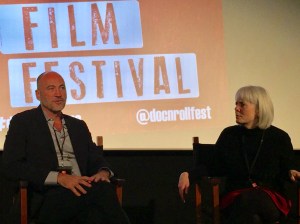
Bang! is a thrilling, moving and at moments very funny film about a remarkable character, a Jewish hustler who loved African-American singers, Cuban dance rhythms, and Italian mobsters in equal measure. In a Q&A after the Doc’n’Roll screening in London, Brett Berns said “the sands of time” had covered over his father’s achievements, and that he’d set out years ago with the principal aim of getting Bert into the Rock & Roll of Fame. That finally happened this year, a testament to Brett’s perseverance and belief, but it’s been an arduous process. I recall meeting Joel Selvin in New York in 1998 when was he was doing preliminary research for his ace Berns biog Here Comes the Night, a primary source for Bang!, with excerpts narrated by Steve Van Zandt.

brett-berns

Thank god Brett had the presence of mind to start interviewing acquaintances and colleagues of his father’s long before he was able to garner any interest in the project: Bang! really feels like a labour of love and devotion, boasting irresistible interviews with Bert’s take-no-shit widow Ilene (Brett’s mom); with an enthroned Solomon Burke and with Betty Harris and Brenda Reid (of the Exciters); with surprisingly endearing mobster Carmine “Wassel” DeNoia (who brought the great Freddie Scott to Berns); with his greatest writing partner Jerry Ragovoy; and with a host of the hilarious music-biz Jews who adored Berns (though not with Jerry Wexler, the G – as in Gerald – of Bert’s Bang! label, and someone who doesn’t emerge from the film too well despite being Brett’s godfather).

Doubtless as a result of project’s slow-building momentum, Brett was eventually able to interview Paul McCartney, Keith Richards and Van Morrison – all of whom were touched directly or indirectly by Bert – but predictably they don’t provide much more than cliché in conversation (and Van doesn’t mention the fact that Wassel once smashed an acoustic guitar over his head in New York’s King Edward Hotel… or perhaps Brett had to edit it out).

The only gaping omission in this fine film is any vivid impression of Berns himself, given the regrettable absence of interview footage with the man. But there is a wonderful piece of session audio in which Bert coaches the magnificent Betty Harris through the opening line of ‘It’s Dark Outside’ – and it tells you all need to know about this deeply soulful cat and the big heart that gave out on him on a bitterly cold day at the end of December 1967.

See Bang!, read Here Comes the Night, and plunge back into those gloriously overpowering soul ballads.

Oh, and here’s a MOJO piece I wrote on Berns back in March 1998…

filmstill-76

Bert Berns: The Soul Man with a Huckster’s Heart

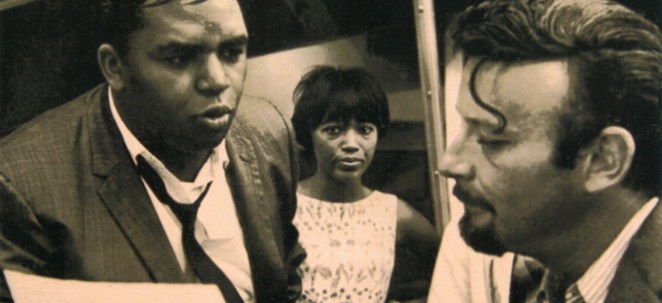
HE WAS, said Jerry Wexler (above right), “a paunchy, nervous cat with a shock of unruly black hair”. He looked like a vaguely disreputable cross between Gene Vincent and Denholm Elliott. He liked the company of gangsters, and he boasted that he’d run guns and dope in the Havana of the 1950s.

But Bert Russell Berns was also a master of symphonic soul, of the uptown New York sound that combined cascading orchestration with drenching gospel vocals. He made the kind of records Bacharach and David might have cut had they ventured down to Stax, or Pomus and Shuman down to Muscle Shoals: stupendous soul singles like Betty Harris’ ‘Cry To Me’, Solomon Burke’s ‘Goodbye, Baby (Baby Goodbye)’, Ben E. King’s ‘It’s All Over’, and Freddie Scott’s ‘Are You Lonely For Me’. In partnership with Jerry Ragovoy, Berns wrote and produced orgasmic soul ballads by Garnet Mimms and Erma Franklin, whose scorching ‘Piece Of My Heart’ has been covered by everyone from Big Brother & the Holding Company (1967) to Shaggy (1997).

“He was a great writer, a great man,” said Solomon Burke. “‘Cry To Me’ [1961]… was really soul music. It wasn’t like pop at that time, it wasn’t country, it wasn’t like R&B. The only way it could be classified was soul music. That’s when it all started.” High praise from a man who, according to Jerry Wexler, actively disliked the cocky, street-smart Berns.

Berns had learned his smarts in the Bronx, where he was born to Russian immigrant shopkeepers on 8 November 1929. He studied classical piano as a child, and possibly even attended the famous Juilliard music school. Employment during the ’50s came in a variety of forms: work as a salesman, as a music copyist, and finally as a session pianist. Smitten with salsa, he headed south to Cuba and soaked up the quajira rhythms of Havana – rhythms that would come to serve him well in the early ’60s. (Jerry Wexler remarked that Berns made a virtual cottage industry out of the chord changes to ‘Guantanamera’.)

Returning to New York at the end of the ’50s, Berns took a job as a songplugger with Robert Mellin Music, just down the road from the Brill Building on Broadway. Under the pseudonyms Bert Russell and Russell Byrd, he wrote songs – and even recorded them – for labels like Laurie and Wand. With Phil Medley he wrote ‘Twist And Shout’, a song massacred by Jerry Wexler and Phil Spector when they produced a sorry version for Atlantic vocal group the Top Notes, but then revived by Berns himself when he produced the 1962 version by the Isley Brothers. Other early hits included the Jarmels’ ‘Little Bit Of Soap’ and The Exciters’ ‘Tell Him’.

Work for Atlantic began in late 1960. “He just came off the street one day and started demonstrating songs to me,” recalled Jerry Wexler. “He had so many ideas and licks that I said, ‘We’re gonna produce some records together’.” Taking over the Drifters from the departing Leiber and Stoller, Berns produced ‘At The Club’, ‘Saturday Night At The Movies’, and the group’s last great single, ‘Under The Boardwalk’ (1964), with its sombre Berns-Wexler-composed B-side ‘I Don’t Want To Go On Without You’. For Solomon Burke he produced ‘Cry To Me’, ‘The Price’, and ‘If You Need Me’, and co-wrote ‘Down In The Valley’ and ‘Everybody Needs Somebody To Love’ (a song Burke described as “our gospel march”). Wexler even put new signing Wilson Pickett with Berns for one single, the gloriously misjudged but ‘Come Home, Baby’. “Bert had Pickett crooning, something like Ben E. King, and it was a flop,” Wex said.

In 1963, fate had brought Berns together with Philly-based writer-producer Jerry Ragovoy, and he wound up splitting the royalties on the sublime lamentation that was Garnet Mimms & the Enchanters’ ‘Cry Baby’ – backing vocals courtesy of Cissy Houston and the Warwick sisters. “Bert was a meat-and-potatoes four-chord basic kinda guy with a street feel that other people would have killed for,” Ragovoy told Al Kooper. “I think his talent far exceeded mine, but he couldn’t really hear past four chords, and comparatively I was sophisticated. So I would come up with a fifth chord and he’d give me that look and say, ‘What is that, bebop?'” After several more Mimms beauties – ‘It Was Easier To Hurt Her’, ‘I’ll Take Good Care Of You’ – Ragovoy took the uptown soul sound to a delirious extreme with Lorraine Ellison’s volcanic ‘Stay With Me’ (1966).

Booming drums, mournful horns, gospel keyboards, wailing female vocals: these were just some of the ingredients Berns utilised to produce such sobbingly cathartic sides as ‘Cry Baby’, ‘Cry To Me’, and Ben E. King’s 1964 masterpiece ‘It’s All Over’. There’s a lot of raw despair in these records, but it’s a despair held in check by the craft of the arrangements. “I never met anyone who understood pop so well,” wrote Nik Cohn in Awopbopaloobopalopbamboom. “He was an identikit American record man, canny and tough and flash, always money-conscious… he wasn’t a beautiful person but he was intelligent, articulate and he made some good lines.”

Cohn met Berns in “a decaying West Hampstead caff” in mid-1965, on one of the trips Berns made to London to produce Them and Lulu for Decca. Ironically, given the group’s cover of Twist And Shout, Berns could see that the Beatles were sounding the death-knell for Brill Building pop. “These boys have genius,” he told Cohn. “They may be the ruin of us all.” This may be partly what had sparked his interest in Them, and especially in the band’s truculent frontman Van Morrison. “Bert was a very creative, dynamic guy,” Phil Coulter, right-hand-man to Them’s manager Phil Solomon, told Johnny Rogan. “He beat the band into shape. It had always seemed like Van Morrison and a bunch of geezers. But without diluting their rawness, Bert gave them a lot of cohesion.”

The cohesion even extended to the hiring of “Little” Jimmy Page on lead guitar for the session that produced ‘Baby, Please Don’t Go’ b/w ‘Gloria’. Them had an even bigger hit with Berns’ own ‘Here Comes The Night’, which reached No.2 in March 1965 and even cracked the American Top Thirty. Indeed, Berns believed in Morrison’s talent enough to send him a one-way ticket to New York after Them had split up, and to sign him to the Bang! label he had formed in partnership with Jerry Wexler and Ahmet and Nesuhi Ertegun.

Taking his place on a roster that included the McCoys and Neil Diamond, Morrison soon found that Berns was giving him less than his undivided attention. Apart from the enduringly charming ‘Brown-Eyed Girl’, which made the American Top Ten in August 1967, the tracks cut in New York with Berns – including the epic ‘T.B. Sheets’ and early, Dylanesque versions of Astral Weeks‘ ‘Madame George’ and ‘Beside You’ – left Van deeply unhappy. For all of Berns’ desire to break the mold, his business style was still pure Broadway hucksterism – and utterly inappropriate for Morrison, who recorded a series of songs with nonsensical lyrics to fulfil his Bang contract. (A propos the business style, Jerry Wexler claims that things “started to get funny” with Berns in 1967, and that there “signs that he was running with wise guys”. When Berns sued Atlantic for breach of contract, Wexler and the Ertegun brothers “said goodbye to Bang”.)

The story goes that Berns brought ‘Piece Of My Heart’ to Morrison and asked him to help him finish the song. When Van declined, Berns took the song instead to his old partner Jerry Ragovoy, who came up with the immortal “Didn’t I make you feel like you were the only man” opening line and completed most of the verses to go with Berns’ lacerating chorus. Recorded by Aretha Franklin’s sister Erma, it became the twenty-first single on the Shout label that Berns had formed in 1966 as a soul counterpart to Bang – and which had already released one bona fide classic in Freddie Scott’s funky ‘Are You Lonely For Me’. (When Keith Richards was asked to pick his desert island Top Ten in 1986, he chose both ‘Are You Lonely For Me’ and ‘Piece Of My Heart’.)

‘Piece Of My Heart’ was Berns’ last great soul production, but not the end of his influence on pop music. Janis Joplin, for starters, would go on to record ‘Cry Baby’, as well as two further Jerry Ragovoy songs, and the Blues Brothers would turn ‘Everybody Needs Somebody To Love’ into their very own sanctified anthem. Occasionally someone else draws on the deep well that was Berns’ musical spirit and offer up a slice of deep orchestral soul in a spirit of homage to the man Solomon Burke – mistaking the man’s heritage – called a “paddy motherfucker”. When Maria McKee and Sam Brown collaborated on a track for McKee’s 1993 album You Gotta Sin To Get Saved, they came up with the ecstatic ‘I Forgive You’, a magnificent tribute to the man who keeled over from a heart attack in a Manhattan hotel room on 30 December, 1967.

“Berns was a soul savant, a backroom white soul brother,” writes his son Brett in the liner-note to a double-CD package of Berns classics serviced to the industry this summer by the Sloopy II Music company that administers his publishing. Jerry Wexler, who did not attend his funeral, said that Berns was “eclectic, a tireless go-getter and hitmaker”. Few unsung heroes of ’60s soul are more deserving of a place in the pantheon.

The Best of Bert

The Isley Brothers: Twist And Shout (Wand, 1962)

Betty Harris: Cry To Me (Jubilee, 1963)

Garnet Mimms & the Enchanters: Cry Baby (United Artists, 1963)

Solomon Burke: Goodbye Baby (Baby, Goodbye) (Atlantic, 1964)

Ben E King: It’s All Over (Atco, 1964)

Them: Here Comes The Night (Decca, 1965)

Garnet Mimms & the Enchanters: I’ll Take Good Care Of You (United Artists, 1966)

Freddie Scott: Are You Lonely For Me (Shout, 1966)

Van Morrison: Brown-Eyed Girl (Bang, 1967)

Erma Franklin: Piece Of My Heart (Shout, 1967)