His Name was Prince

methode-times-prod-web-bin-21b4e43c-ba5b-11e7-85ff-fb955b2fbca8.jpg

Yesterday morning I had a private tour of the new Prince exhibition at London’s O2 centre… This is the unedited version of a Times piece I wrote about it.


I hadn’t expected the sudden pang of sadness as I walked in and saw all those gaudy, gloriously naff outfits. My eyes went straight to the studded trench coat – slightly frayed – that Prince wore in Purple Rain, and I was intensely aware he wasn’t inside it. He would never wear any of those costumes, or play any of those daft guitars, again.

The clothes looked child-size, tinier even than I remember him being. For all their brocaded opulence, they made him less immortal than he’d seemed in life. As did the other artifacts in the O2’s My Name Is Prince exhibition: the grubby notebooks and yellow legal pads he scrawled his lyrics on; the road-worn flight cases in the special “VIP” rooms; the bar of Dove soap in his backstage makeup box.

I don’t know why any of these relics should have surprised me. For all his “godlike genius” (to use that overblown rock-journo phrase), Prince was as human as the rest of us, a fact made starkly clear by the nature of his passing – an overdose of the “hillbilly heroin” Fentanyl just 18 short months ago. But he operated on a level of enigma, artifice and musical extravagance that bordered at times on the supernatural.

Nik Cohn, the first great rock journo, called Prince the most naturally talented musician in the history of pop; I wouldn’t disagree. A walking one-man mash-up of Sly Stone and Stevie Wonder, Jimi Hendrix and Mick Jagger – not forgetting James Brown, naturally – he could somehow do anything and everything. Including, as it turns out, wash his face with Dove soap.

One might legitimately ask why My Name Is Prince, like the record-breaking David Bowie and Alexander McQueen exhibitions, wasn’t put on at the Victoria & Albert Museum. Its curator, Angie Marchese, told me there are no fewer than 8,000 “pieces” at Prince’s old Minnesota home/HQ Paisley Park, so there’s certainly no shortage of items for a far bigger show. Could it be because he was African-American? Or just because he was ultimately less savvy about fashion than Bowie, let alone McQueen?

Yet that’s one of the things I find most endearing about My Name Is Prince. The entire exhibition is a testament to an essentially small-town notion of glamour, a homemade synthesis of glam androgny and neo-psychedelic dandyism that mirrors the synthesis of the man’s greatest music.

Prince never moved to the coasts; never worked with name designers; never became just another papped celeb in Versace or Lagerfeld (or McQueen). All the outfits from 1987 onwards – starting with the faintly revolting orange-peach ensemble created for 1987’s creative zenith Sign ‘O’ The Times – were made by his own team of seamstresses at Paisley Park. That includes, of course, the matching high-heeled footwear that indirectly killed him. Decades of dancing in them did for both his hips and left him in constant agony. Hence the Fentanyl.

If anything about the exhibition disappoints, it’s the relative paucity of items from the pre-Purple Rain years: no jockstraps from the Dirty Mind days, not a lot from 1999, barring typed lyrics for ‘Little Red Corvette’ and other songs from that breakthrough album. (There’s nothing at all from the late ’70s era of ‘I Wanna Be Your Lover’ and his first two albums for Warner Brothers.) There was something so fresh and D.I.Y. about the hybrid new-wave punk-funk of Prince’s formative period; I’d like to have seen more of it at the O2.

But there’s more than enough to compensate for the absence of 2-Tone badges and kinky garter belts: a multitude of bizarrely-shaped guitars; a recreation of the stage Prince used in his last years; the “third-eye” sunglasses designed in 2014 by Minneapolis sisters Coco and Breezy; and notebooks for the Dreams script that became Purple Rain, with dialogue for Vanity rather than her successor Apollonia. (Embossed on one of the exhibition’s encased notebooks are the words “I’m not crazy I’m creative”. But as we all know, there’s a very thin line between genius and madness.)

Prince was such a weird little dude: so self-possessed, so spookily smart, so almost otherworldly. The one time I interviewed him was the oddest pop encounter I’ve ever had. Yet walking bleary-eyed (and a little teary) around this exhibition, I remembered how radical and revolutionary he was: a miniature purple god, part magus, part satyr, as lewd and libidinous as he was emotionally daring. He made Madonna and Michael Jackson sound like hacks.

And even here, walking through the vaults and wardrobes of his thrilling career, he remains an enigma – a man behind a mask.

Noisey Joni

1508670809476-GettyImages-113247081.jpeg

I had a good conversation the other day with Noisey’s Philip Eil about the Joni Mitchell anthology we put together at Rock’s Backpages. Read it HERE if you will.

“If I was to make kind of crass analogies, [I’d say that if] Dylan is sort of Shakespeare, then Joni is Milton… or Dante. In terms of popular music that’s more than just mindless singalong pablum, then she is an artist of genuine stature, whose songs, whose music, are as great as any art form, as the work of any artist in the 20th and into the 21st century. It doesn’t matter who the hell it is: Faulkner, de Kooning, Bergman. People tend to think that pop music is a lesser art form. I think when you listen to Court and Spark, you can’t really sit there and say, ‘Well, this is just pop music.’ You have to think of it on a level with the greatest art that’s been done in the last hundred years.”

Any Major Dudes will tell you: Steely Dan panel in Manchester, 11.11.17

Steely Dudes

To celebrate RBP’s brand-new anthology Major Dudes: A Steely Dan Companion, I shall on Saturday 11th November be discoursing with fellow Dan fanatics John Ingham (who reviewed Katy Lied for Sounds) and Daryl Easlea (who revisited Aja for the BBC) about the wit, wisdom and sheer musical brilliance of Donald Fagen and the late Walter Becker. It’s at 2.15 pm at Manchester’s Louder Than Words festival, and you can book tickets here

Grizzly Bear at Kingston College, 1.10.17

grizzly-450x269-1

On a damp Sunday night, in the unlovely London satellite town that is Kingston-upon-Thames – and for a paltry £12, moreover – I got to see the greatest American rock group of the last ten years play for a whole glorious hour. It reminded me why one cares about “rock” at all. Sometimes I think I no longer do.

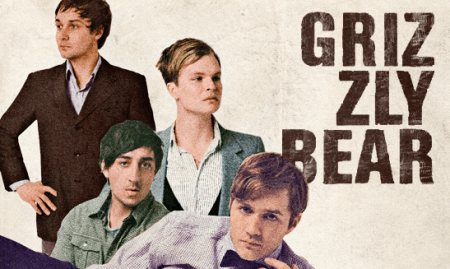
Grizzly Bear – launched 15 years ago on a wave of bands with similarly bestial monikers – are an unFab-looking Foursome who’ve made some of the best records ever to come out of the U.S. They could be a random quartet of white Brooklyn hipsters, skirting middle age, politely wry and super-smart; you wouldn’t, looking at them, expect the astonishing music that pours so passionately out of their speakers on the small stage of Kingston College’s Arnold Cottesloe Theatre. (A big thank-you to local Banquet Records for bringing them here.)

Their songs, like their sonics, their textures, their voices, aren’t like much else I’ve ever heard in “rock” (though I’ll concede there are fleeting echoes of America, Jonny Greenwood, Jim O’Rourke, Doves, Surf’s Up and Big Star Third in there). They blaze with not just beauty but delicious intricacy, overlapping splashes of melody, archness but sweetness, emotion that’s never cheap or crass.

It’s true the Bear’s peak moment may be behind them. Commercially they may not top ‘Two Weeks’ or have Mr. and Mrs. Shawn Carter come see their show. Yet Painted Ruins, the latest album by Ed Droste, Daniel Rossen, Chris Taylor and Christopher Bear, is no less lovely or transporting than 2009’s Veckatimest or 2012’s Shields, and the songs from it performed tonight are, without exception, sublime. The same intimate intelligence, and the same sense of wonder, inform the gorgeous ‘Mourning Sound’ and ‘Three Rings’ as inhabit Shields‘ ‘Sleeping Ute’ and Veckatimest‘s ‘While You Wait for the Others’ (both also aired tonight).

The contrasting but equally tender singing of Droste and Rossen is wonderfully underpinned by Rossen’s treated guitars; by the subtlest keyboard padding (much of it supplied by part-time Bear Aaron Arntz); by Taylor’s craggy Rickenbacker bass; and by the emphatic Christopher Bear tom-tom patterns that suggest immersion in the sonic scaping of the late Martin Hannett (no rote rock timekeeping here).

Unlike far too many rock shows these days, Grizzly Bear’s sixty Kingston minutes are accorded a respectful, almost awestruck silence during their songs: I heard no attention-deficit chatter whatever, rather a surrender to the waves of sound, the loose bliss of the playing, the spacey reverbed textures, the almost jazzish unfurling of the melodies. This is a kind of angelic post-post-rock, fey but frenzied when it needs to be (e.g. the squalling freakout that brings ‘Yet Again’ to its climax).

With seven minutes to go, the Bear do the only decent thing and finish with Shields‘ epic, slowly exploding finale ‘Sun Is In Your Eyes’, an ecstatic song of soaring hope that has us all rapt. There are bigger Bear shows coming up: make sure you see at least one of them.