Thank you, Gerald Seligman…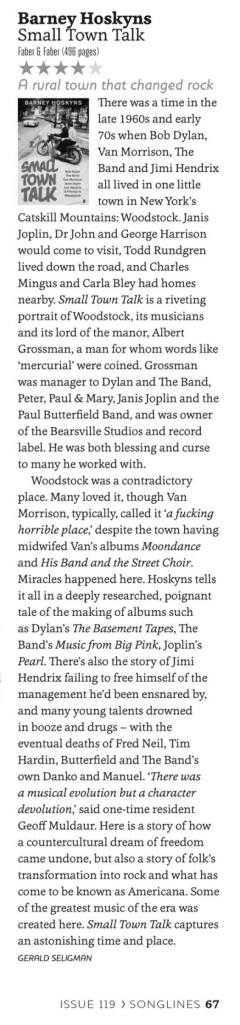
Thank you, Gerald Seligman…

MY WIFE OFTEN mocks my penchant for austere Euro art movies. So when we went to see Mia Hansen-Love’s L’Avenir (Things to Come) at one of London’s inevitable Curzons, it felt like slipping into an old pair of espadrilles. I remembered liking Hansen-Love’s Le Père de mes enfants (2009) and figured – on the basis of the inevitable reviews by Peter Bradshaw et al. – that I’d like L’Avenir.
And guess what, I did. Apart from anything else, Isabelle Huppert was superb: bustling, unsentimental, alone and ultimately atomised. Yet I wasn’t entirely moved by her late-middle-aged losses, however many of them I’ve shared. That’s partly because her character (Nathalie Chazeaux) so effectively seals herself off from compassion, retreating for comfort into the pensées of Pascal, Rousseau and the many other philosophers whose work she teaches to her Parisian students.
But it’s also partly because L’Avenir felt familiar to the point of generic staleness: with a few changes of wardrobe and automobile, the film could have been made 30 years ago by, say, the great Bertrand Tavernier. The arthouse tropes were reassuringly non-Anglo-American: the endless bookshelves, the coffees and the baguettes, the jagged Alpine mountains and the Brittany coastline, the sardonic political banter à table.
En route home, my wife inevitably asked if I’d enjoyed it. I wasn’t sure. I’d admired it; it wasn’t pretentious; its absence of catharsis was, in many ways, admirable. But had it really just been another fix for my Francophile snobbery? Some residual belief that French intellectuels think more deeply about the human condition than Brits or Yanks do – even when all the pages of Pascal and Rousseau (or, for that matter, Adorno and Schopenhauer, who also get regular namechecks in L’Avenir) offer so little comfort to Hansen’s heroine?
In that connection, here’s a poem I wrote a couple of years ago about, well, my penchant for austere Euro art movies:
Art House

Plusher seats and fancier snacks,

Guardianista dreaming in the dark:

No popcorn here, no CGI,

just quiet scenes of bourgeois desperation,

suites in Paris or Milan,

the quaint and crumbly farmhouse,

tension and baguettes,

father, daughter, in a Citroen,

not even speaking.

Four-hour films without a single gun,

occasionally a breadknife raised in anger.

Haneke, Almodovar, Zvyaguintsev's The Return.

Films of slow release for middle-aged and middle-class,

waiting for catharsis as we crunch Wasabi nuts.
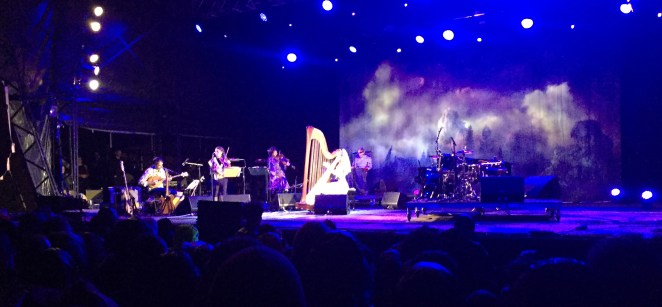
THERE AREN’T many contemporary musicians I’d stand in the pissing Wiltshire rain at summer’s end to hear: I’m too ancient to care too much about Next Big Things (or most of the last ones, for that matter). So much sounds so samey, so patched together from old building blocks.
Then there’s Joanna Newsom.
What on earth – I wondered when I first heard 2004’s Milk-Eyed Mender – WAS this combo of harp plinking and faux-naïf girlishness: a voice whose apparently affected Melanie-meets-McGarrigles timbre has proved to be archetypal musical Marmite? I’ve always been partial to the Kook brigade – a chain of fearless females stretching from Nyro to Bjork via Bush, Mary Margaret O’Hara and more – but not even they quite danced on this high wire.
I heard the voice – was it on one of Peel’s last shows or on the late Robert Sandall’s Mixing It? – and straightway embraced it as, yes, mannered but, no, not precious or twee as Newsom’s detractors would claim it is. I heard it as real, true to its own emotional shtick, fully engaged and immersed in the girl’s strange and gorgeous melodies.
What could we call the style that then evolved on 2006’s Ys [“Eeese”] to become a tingling hybrid of Bjork’s Vespertine and Van Dyke Parks’ Song Cycle? “Chamber Americana”, maybe? The story goes that Newsom’s then-squeeze Bill (Smog) Callahan turned her on to Song Cycle; that Parks was then hired to write string and woodwind arrangements for such outré Ys pieces as the closing ‘Cosmia’. Some deemed Parks’ micro-baroque decoration excessive, but to me it exquisitely complemented the Mills College graduate’s sonic filigree.
For the closing Sunday set on End Of The Road’s Woods stage, Newsom is accompanied by, among other things, violins – played by a pair of brilliant women who play all kinds of other obscure instruments as well. The two equally brilliant male players also frequently switch to other unusual instruments, though they additionally supply the more conventional rock elements of drum kit and electric guitar. (I suppose the point is that this isn’t rock music at all. I’m standing in the dark Larmer Tree drizzle because Newsom has so beautifully broken free of rock’s terminal tropes – and also of the many “alternative” music forms that have become their own generic traps and cul de sacs.) I’m confident she will astonish me, even if she plays the rolling and relatively orthodox piano pop of Have One On Me‘s heavenly ‘Good Intentions Paving Co.’.
The latter turns out to be the last song of a breathtaking set characterised by intense concentration: by dazzling beauty and complexity, high drama and virtuoso passages more thrilling than any pounding rock discharge. She’s a strange sprite, is Newsom: part faerie queene, part California gal with her beaming smile and her “thank you so MUCH” after every round of applause. But there’s nothing fey or ethereal about her singing or her playing – mainly at the harp that sits centre-stage, sometimes at the grand piano at the back (for ‘Good Intentions’, ‘Waltz of the 101st Lightborne’ and more). Every interlocking part of her songs is so precise and considered, every long knotty vocal line unspooled with such passionate conviction.
It’s not like I don’t get how odd Newsom’s voice is: it’s extreme and no mistaking. But it’s come a long way from the ditsy Appalachiana of Milk-Eyed Mender: it’s the human voice as theatre, a sound as rich and beguiling as any singing I know, whether it’s tackling the convoluted swirls of ‘Cosmia’, the crazed nursery rhymes of ‘Monkey and Bear’, or the slowly unfurling ecstasy of Divers’ ‘Time, as a Symptom’.
Maybe it’s just because I’m growing old and slowing down that the work of women like Bjork and Newsom feels so much more fluid, intuitive, and exuberant than the constrained music of their male counterparts. All I can say is that Newsom – kooky or otherwise – possesses a talent that’s unfettered but never pretentious. She’s a poet and songstress whose voice soars and carries me into the lowering English sky: into the cosmic mystery that all the greatest music intimates.


In the Wiltshire drizzle for End of the Road: small-town-talking with Julian Mash; in the big top with Dumbo; listening to Josienne Clarke and Ben Walker with a seated Geoff Travis, book-signing with Travis Elborough; getting (two-toed) slothful with my darling wife Natalie… and harping on about the always exceptional Joanna Newsom.
Honoured to be revisiting the hazy daze of Haight-Ashbury (and North Beach) in the august company of the great (Barry) Miles… at the Times Cheltenham festival.
Fri 7 Oct 2016 8:30pm – 9:30pm, The Inkpot, Imperial Square
Also yakking about genius and dysfunction in the life of the head Beach Boy with Will Hodgkinson and Lisa Verrico…
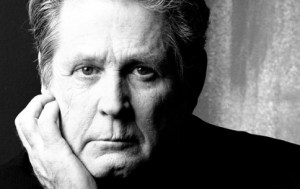
Sun 16 Oct 2016 12:30pm – 1:30pm, The Sunday Times Garden Theatre
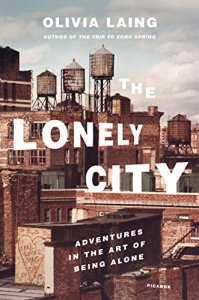
After seeing Olivia Laing speak impressively at July’s Port Eliot festival, I read her brave and remarkable book about a subject that’s almost taboo in our culture: loneliness.
The Lonely City is a study of alienation and estrangement – but also of art, AIDS, attachment and social media – and I recommend it highly. Laing writes of her own bewildered isolation in Manhattan, takes in the work of Warhol, Hopper and others, and says such interesting things about the terrors of aloneness vs. the joys of solitude. Like most of us I’ve experienced intense loneliness in my life – but also a kind of ecstatic solitude. The Lonely City made me think deeply about all of this.
Laing writes beautifully and with piercing honesty. “What’s so shameful about wanting,” she asks. “Why this need to constantly inhabit peak states, or to be comfortably sealed inside a unit of two?” She’s also brilliant on Facebook, Twitter et al: “I wanted to look and I wanted to be seen, and somehow it was easier to do both via the mediating screen.”
I’ll be Small-Town-Talking at End of the Road in Dorset next weekend: Sunday at 10.45 a.m. – not to mention watching Joanna Newsom, Teenage Fanclub and other greats. Stop by the “literary zone” if you’re in the vicinity…

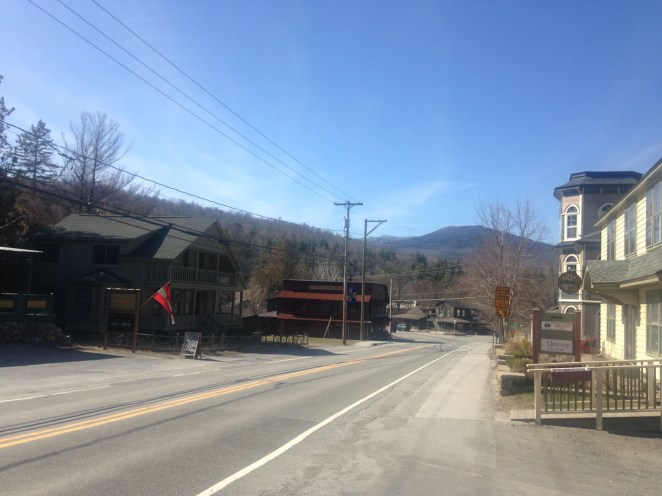
Just a wide spot in the road that’s sunlit, silent:
you just standing there, you illuminated,
hands jammed in your jeans.
I fixed the moment with my phone
so see it still as in a dream.
We found a gift store on a bend
and wandered through it sniffing things.
I stood beside a roaring bear stuffed years ago
and bought a pointless room spray
made from balsam fir.
It sits at home, reminds me of that place
where we just had each other and were free,
where London did not call
and it was you and it was me.
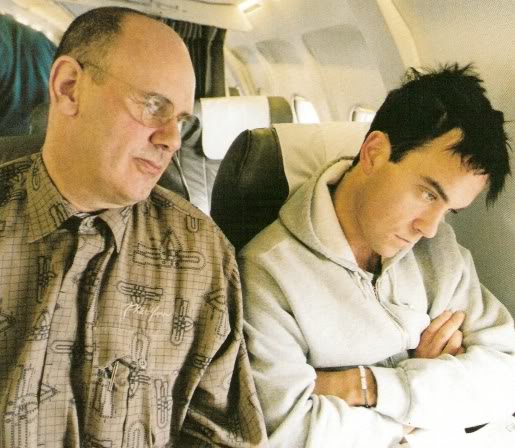
Incredibly sad news just in that DAVID ENTHOVEN, one half of E.G. Management with John Gaydon (King Crimson, Roxy Music) and half of I.E. Management with Tim Clark (Robbie Williams, most famously) has died after being diagnosed only days ago with liver cancer. “Big Dave” was one of the loveliest, warmest, kindest, smartest people I’ve ever met in the music business, and a lot of us are going to miss him terribly. It was a joy to know you, man. My heart bleeds for all your loved ones.

An Audioboom snippet of the late great BOBBY WOMACK talking ’bout his gospel roots on a tour bus on the 1984 Poet II UK tour. Not long after we finished speaking, we disembarked and took a tour of Warwick Castle…
 barneyhoskyns.com