get out

Get Out

“I knew my deepest dread had not been of getting robbed or even shot. I’d been afraid of blackness itself.” Nik Cohn, Tricksta


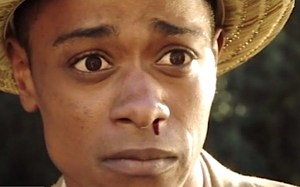
Haunted by the trickle of the blood,

the tears that coursed along the skin –

the scenes I watched in horror as I flew –

I never felt as white as I feel now.


Around me sit black men and women:

descendants all of men and women

bound and shackled on the ships,

bought and sold five hundred yards from here.


How deep the rage must run, how much I’d hate

the pallid man sat here.

How vile the colours of his skin,

how smooth and smart the darkness of their cheeks.


There is no end to this, no change is gonna come:

there’s war and more. And even Dan Penn voted

for the blotchy pig, the vicious troll who sports

the honeycomb that’s spun of lies.


Get out! Get out!

For even in our blandishments,

our Jazz Age negrophilia,

we’re rotten to the core.


Charlestown, Nevis, January 2019

Against Narrativity

bruce

(with apologies to Galen Strawson)


Bruce on Broadway, born to run and run,

the burr of Everyman whose tales of bars and father

constitute the story of a life well done.

So why does life for me instead feel like a murky mess,

disjointed, pointless, scattered, inconclusive,

never like the lives in songs and films?

For only there is our existence tragic, glorious

or merely meaningful; only there is life a valiant lie

delivered by a righteous standup guy.

Munch’s Girls: Oslo, 2014

edvard_munch,_the_girls_on_the_bridge,_ca._1901,_national_gallery,_oslo_(36329087201)


I’ve lapped this circuit once before,

and stopped before the girl in Puberty,

the long wrists crossing her pudenda still.

I’ve turned from wanting to protect her,

scanned The Dance of Life from left to right and birth to death,

tried not to see that leering fiendish face lean in,

and of course have heard the Skrik that sounds around the world.


Today the one that caught me and called out from its frame:

the study of the trio on the bridge,

a moment frozen for all time that nonetheless

moves form and matter so all swirls and flows,

vibrates as matter does,

the stilled and staring girls themselves a single shape in aureole,

road rushing down in shooting lines

and all forms molding into one another

as the physics mystics say they do.


I stood intoxicated, psychedelicized,

stood swimming in those lines and shapes

and saw again how all great painting takes the apprehended world

and melts it down to show it as a single intermingled thing.

In three dimensions we’re deceived, believe we are

discrete and solid selves,

and so we stop upon the bridge and scream.


National Gallery, Oslo, February 2014

Sticky fingers: The RBP podcast

Podcast logo48404699_10156905477441449_8732269687930355712_o

Featuring exclusive clips of an increasingly intoxicated KEITH RICHARDS during a 2002 interview by Adam Sweeting, the latest Rock’s Backpages podcast could be described as a ROLLING STONES special if there weren’t so many other things being discussed. Lauding Keef, 75, as the band’s heart & soul and asking “how this man has made it to 75”, Mark Pringle (left) and myself then wax lyrical about the brilliant Performance.

Directed by the late Nicolas Roeg and Donald Cammell – with a Jack Nitzsche soundtrack I describe in the podcast as one of the “creepiest, weirdest, but most mesmerising” he’s ever heard – Performance sums up the transition from ’60s flower power to something altogether darker and spookier, with the Stones themselves at “the centre of a vortex of social change”.

Other topics under consideration include Elvis Presley, the Beastie Boys, Paul Weller, Fleetwood Mac, Ice Cube and Gary Barlow’s envy of of Robbie Williams…

Etta James in the Rock’s Backpages podcast

Etta James

They were so much older then, they’re younger than that now: me ‘n’ RBP’s Mark Pringle reel in the years and riff on all that’s new this week in the world’s biggest library of music journalism – definitive interviews with legends of the last 60 years by the pop press’ greatest writers … and much much more.

In this week’s RBP podcast , the great ETTA JAMES considers her life in R&B up to 1978—‘Roll With Me Henry’, Johnny Otis, Chess Records and working with Rick Hall in Muscle Shoals. Your hosts in turn consider her impact on singers from Janis Joplin to Adele and discuss the late Rob Partridge, Royal Trux and pioneeringly “out” glamster Jobriath. Their attentions then turn to Burl Ives, Marc Bolan, Willie Nelson, Portishead and the Fugees.

civil war

FB thread

I try to stay away,

stay off the grid, resist

the impulse to let fly.

No good can come of this:

I cannot change your mind.


But sometimes I’m too stoked,

I have to vent or else explode.

And then the invitation’s there: please step this way.

The silo and the echo chamber usher in

the apoplexies of the day.


So up it goes, the link, the pic, the facile howl.

I’ve posted what was “on your mind”,

I’ve shared the shit that swills about the brain

and straightway know the soapbox hollowness

of howling out the pain.


But still I leave it there and still I check

who Liked, who Commented,

my very own below-the-line:

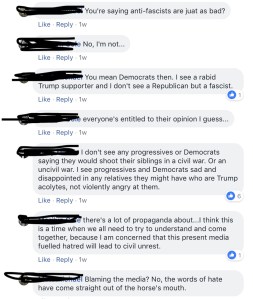
the kitchen-table trolls and, worst of all,

the Friends who seem entirely blind.


I thought I knew them,

thought they had a heart,

but here they are, they’re fuming,

fulminating, spewing out their poison.

Even worse, they’re quoting Jordan Peterson.

A Song for Her: Back to Amy Winehouse

9781788400596_1024x1024

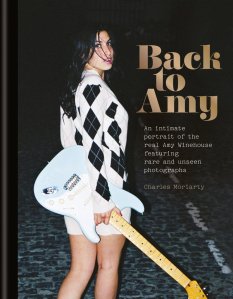
I was honoured to be asked to contribute to Charles Moriarty’s book of photographs of the great Ms. Winehouse. My essay “A Song for Her” is included in Back to Amy, published this week by Octopus. I dropped into the piece this review of Amy’s awesome show at London’s Somerset House in July 2007:

From Silver Lake to Somerset House, via a Miami wedding and a Mercury Prize nomination: would Amy stand me up a second time? Well, she didn’t, and she told us – more than once – how she’d looked forward to this for “months”. I’m guessing she’s caught a show or two here herself, experienced its summer-piazza feel for the pleasant change it makes from your average concert venue.

I was instantly smitten by Winehouse’s sophomore opus Back to Black: not by novelty item ‘Rehab’ per se (I’m bored to fuck by Priory Rock) but by the album’s other treasures, which all did something I didn’t think possible: take the basic Sixties soul template, tweak it just enough for a tattoo’d post-hiphop generation, and turn the whole ritual into something vitally personal and contemporary.

Me? I was never convinced by Joss Stone and never will be. But this little slip of a Jewish street princess comes over 100% credible, customising her soul and ska influences to fit her fucked-up persona. Someone said Winehouse’s lyrics read like pages from a drunken teenager’s diary, but they’re more than that: they’re piercingly believable, achingly sharp, rid of cliché.

Great artists combine artfulness with something that’s rawly their own: the key is that we can’t separate the two from each other, to the point where it ultimately doesn’t matter anyway. With Winehouse we’re drawn in by an uncanny mix of hip (hop) toughness and about-to-implode vulnerability (which might just be part of her “act” – how can we know and why, frankly, should we care?)

Here she is, this skinny slumming hiphop Ronnie Spector with her mascara mask and piled-high beehive, the sole female onstage with a besuited band that look like rude-boy bodyguards: the two black dancer-singers, the three white hornmen, the guitarists and drummer who resemble some late Sixties Kingston session band.

Here she is, underplaying every vocal flourish and girlish provocation, and we can’t tear our eyes from her dark elfin figure. We want to know more, to know how dangerous this really is. The remarkable thing is, she’s not a brat at all. She lets her music do the talking. (Stop the press: she’s a total pro!)

She sings brilliantly, saving herself and placing every line just so, periodically letting herself go in a melismatic cry from the heart. The voice is essentially Lauryn Hill’s, as the passage from ‘Doo Wop (That Thing)’ tacitly acknowledges, but you don’t actually think Fugees or Miseducation when you hear it.

While the whole effect – the iconography and the choreography – is a hair’s breadth away from Stax-Motown pastiche, it never feels like that. In fact, the essential feel of Back to Black isn’t Stax/Motown at all but the early Sixties girl-group soul that came out of Chicago and New York’s Brill Building, infused with the street-sharp mood of ska and bluebeat (and even 2-Tone, as the cover of the Specials’ ‘Hey Little Rich Girl’ makes clear). ‘Me and Mr Jones’, perhaps her most startling song, almost feels pre-soul. ‘Wake Up Alone’ and the heartbreaking ‘Love is a Losing Game’ are more Luther Dixon or Berns/Ragovoy than Berry Gordy or Booker T. and the MGs. The genius of Back to Black is that it recreates the ornate feel of that music while emphatically yanking it out of the museum.
“What kind of fuckery is this?” I’m not sure I know, other than that Winehouse gets me deep in my gut. I dare say she’ll crash and burn like every other codep dipso celeb in London, but even if she does she’ll have left behind at least one remarkable record. As she winds up with the Zutons’ ‘Valerie’, everyone is smiling and jumping with untrammelled joy: live music doesn’t get any better than this.