Is that machine on? Archive on Radio 4

JIMI-1000x722.jpg

Along with Jon Savage, Allan Jones, Caitlin Moran, Michael Lydon and presenter Stuart Maconie – to mention but a few – I’m one of the voices gabbing in Jonathan Mayo’s terrific Radio 4 doc on the golden age of the music-press interview. The programme also features a bunch of clips from the Rock’s Backpages audio archive, including the spoken thoughts of Messrs. Hendrix, Cobain, Marley and Garcia…

Say it one more time…

SIOMT_cover 2

A heads-up that my first book finally has a US publisher after 30 years. BMG reissues this revised and expanded edition on August 14th, complete with tons more pix by Muir Mackean and a foreword by William Bell – one of the great country-soul singers.

Here’s what BMG themselves have to say about it:

“Say It One Time for the Brokenhearted was the first of many titles by renowned UK music journalist Barney Hoskyns. Thirty years after its publication he revisited the modern-day classic for this revised and expanded anniversary edition that marks the book’s first publication in the US. Fascinated by the collision of country and soul music in the Southern states, Hoskyns and photographer Muir MacKean set out on a journey through the American South to explore the phenomenon of primarily black singers and primarily white musicians joining forces in the 1960s to create musical magic in an era of racial tension. From Memphis to Muscle Shoals to Nashville, they sat down with dozens of the architects of what’s come to be known as Country Soul to capture a story that is as inspiring as it is historically important.”

river


moonriver.jpg

Knotted into consternation,

weight of words and burdens

and injunctions to do better.

On a dime a song

floods into me and washes,

softens knots and nodes

and liquifies rigidity of

what I think I am,

splays me forlorn and

floating down this river:

Wider than the sea,

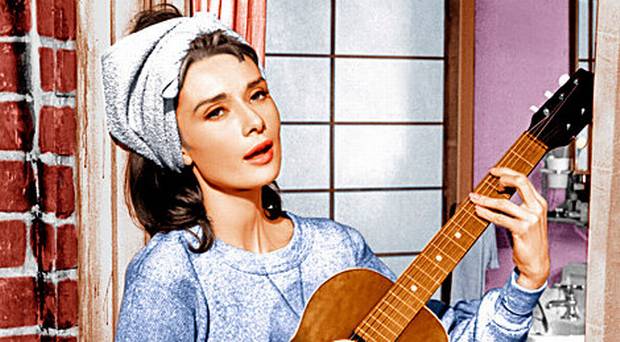
the sound of Hepburn

and her huckleberry friend

and me.

Judd Apatow’s Zen Diaries of Garry Shandling

lead_960_540

LAST NIGHT I finally came to the end of Judd Apatow’s extraordinary four-hour film about the late Garry Shandling – the so-called Zen Diaries of said comedian.
As the director of There’s Something About Mary read aloud a letter that Shandling had written to the older brother who’d died, as a child, of cystic fibrosis, I completely lost it – I broke down and sobbed. I’d come to the close of a remarkable, hilarious, neurotic life haunted by the loss of Barry Shandling (a death never explained to the little brother) and felt overwhelmed by compassion for the witheringly brilliant creator of the meta-show about host Larry Sanders.
It made me realise how much Shandling and his Comedy Store peers – a particular strain of American-Jewish humour that slices through to the heart of the human condition – have meant to me. And it prompted this short distillation of gratitude for the sheer fearlessness of Shandling, Seinfeld, Silverman, Larry David – and of Mel Brooks, Joan Rivers, Jackie Mason and the many who came before them. Out of such pain has come the purest comedic joy I’ve ever known.


comedy store

Always I’m in awe of them:

unsparing men and salty women

lancing my illusions

and my gentile self-delusions.

No hugging and no learning,

nothing left to lose:

ancestral agony of pogroms

and the terrors of the Zyklon B.

The balls it takes to work that space,

illusion of a mastery that masks

the backstage whimper of a fevered need:

  “You think they liked me?”

“Man, you killed out there.”

bleeding heart


keep-and-bear-arms.jpg

I want to kill the pro-gun zealots with a gun

in rage of impotent despair.

What is the fucking point and how banal the anguish anyway:

a bleeding heart’s no bloody use.

And yet and yet and yet:

no hate for hate, no eye for eye,

forgive them for they know not what they do.

Unless that’s just a fucking lie.

for mary p

25445045_10155028261521720_2057135282_o


What does it mean for us that life, for you,

became too bleak to bear?

By your not ending it, your life as such

would not have changed.

The room would be the same,

the world would still have gone about its restless business.

You might have seen it differently.

But three days later it might still have been

as dark and fruitless as before,

regardless of the love we heaped on you,

the testaments to all you did for us.


How could a woman who had given all give up?

Where did those sinking lows take you?

We could not reach you there. We were irrelevant,

were talking loud and only speaking air.

Did you believe that it would change you

in transforming consciousness to naught,

in jolting you from day to night? Well, you were right.

It leaves me questioning my own diminished appetite,

however schooled I’ve been to stop the plunging lows,

to put one foot before the other

and to give this life another go.


My top 30 tracks of 2017

166d6c384231563865ae733ef162d493a1775b89f329421be006952c25a84336a98ed788504da789a6f7746f54fffaaa3feeabe167e9e669fe2fcd516415d63e6142cd651a6507d4120f1b26eabfe8d5

Very much for my own delectation, I’ve compiled a Best Of The Year playlist… but I figured, why not share it with the World At Large?

Here’s the full track listing for your perusal…

1 Future Islands: ‘Seasons’
2 Slowdive: ‘Sugar for the Pill’
3 Kendrick Lamar: ‘PRIDE.’
4 Jesca Hoop: ‘The Lost Sky’
5 Queens of the Stone Age: ‘The Evil Has Landed’
6 Randy Newman: ‘Wandering Boy’
7 Jessie Ware: ‘Your Domino’
8 Grizzly Bear: ‘Glass Hillside’
9 Everything Everything: ‘Desire’
10 Aimee Mann: ‘You Never Loved Me’
11 Ryan Adams: ‘Anything I Say To You Now’
12 Todd Rundgren w/Robyn: ‘That Could Have Been Me’
13 Feist: ‘A Man Is Not His Song’
14 Elbow: ‘Trust The Sun’
15 Hurray for the Riff Raff: ‘Hungry Ghost’
16 Lindstrom: ‘Under Trees’
17 Loyle Carner w/Kwes: ‘Florence’
18 Nadia Reid: ‘Right on Time’
19 Grandaddy: ‘Evermore’
20 Thundercat: ‘Bus in these Streets’
21 Kelela: ‘Truth or Dare’
22 Perfume Genius: ‘Slip Away’
23 Jay Som: ‘Baybee’
24 Fleet Foxes: ‘Third of May/Odaigahara’
25 Flo Morrissey & Matthew E. White: ‘Look at What the Light Did Now’
26 Chaz Bundick Meets the Mattson 2: ‘JBS’
27 Shabazz Palaces: ‘Shine a Light’
28 Sampha: ‘Incomplete Kisses’
29 Andrew Bird: ‘Truth Lies Low’
30 Sun Kil Moon: ‘God Bless Ohio’

His Name was Prince

methode-times-prod-web-bin-21b4e43c-ba5b-11e7-85ff-fb955b2fbca8.jpg

Yesterday morning I had a private tour of the new Prince exhibition at London’s O2 centre… This is the unedited version of a Times piece I wrote about it.


I hadn’t expected the sudden pang of sadness as I walked in and saw all those gaudy, gloriously naff outfits. My eyes went straight to the studded trench coat – slightly frayed – that Prince wore in Purple Rain, and I was intensely aware he wasn’t inside it. He would never wear any of those costumes, or play any of those daft guitars, again.

The clothes looked child-size, tinier even than I remember him being. For all their brocaded opulence, they made him less immortal than he’d seemed in life. As did the other artifacts in the O2’s My Name Is Prince exhibition: the grubby notebooks and yellow legal pads he scrawled his lyrics on; the road-worn flight cases in the special “VIP” rooms; the bar of Dove soap in his backstage makeup box.

I don’t know why any of these relics should have surprised me. For all his “godlike genius” (to use that overblown rock-journo phrase), Prince was as human as the rest of us, a fact made starkly clear by the nature of his passing – an overdose of the “hillbilly heroin” Fentanyl just 18 short months ago. But he operated on a level of enigma, artifice and musical extravagance that bordered at times on the supernatural.

Nik Cohn, the first great rock journo, called Prince the most naturally talented musician in the history of pop; I wouldn’t disagree. A walking one-man mash-up of Sly Stone and Stevie Wonder, Jimi Hendrix and Mick Jagger – not forgetting James Brown, naturally – he could somehow do anything and everything. Including, as it turns out, wash his face with Dove soap.

One might legitimately ask why My Name Is Prince, like the record-breaking David Bowie and Alexander McQueen exhibitions, wasn’t put on at the Victoria & Albert Museum. Its curator, Angie Marchese, told me there are no fewer than 8,000 “pieces” at Prince’s old Minnesota home/HQ Paisley Park, so there’s certainly no shortage of items for a far bigger show. Could it be because he was African-American? Or just because he was ultimately less savvy about fashion than Bowie, let alone McQueen?

Yet that’s one of the things I find most endearing about My Name Is Prince. The entire exhibition is a testament to an essentially small-town notion of glamour, a homemade synthesis of glam androgny and neo-psychedelic dandyism that mirrors the synthesis of the man’s greatest music.

Prince never moved to the coasts; never worked with name designers; never became just another papped celeb in Versace or Lagerfeld (or McQueen). All the outfits from 1987 onwards – starting with the faintly revolting orange-peach ensemble created for 1987’s creative zenith Sign ‘O’ The Times – were made by his own team of seamstresses at Paisley Park. That includes, of course, the matching high-heeled footwear that indirectly killed him. Decades of dancing in them did for both his hips and left him in constant agony. Hence the Fentanyl.

If anything about the exhibition disappoints, it’s the relative paucity of items from the pre-Purple Rain years: no jockstraps from the Dirty Mind days, not a lot from 1999, barring typed lyrics for ‘Little Red Corvette’ and other songs from that breakthrough album. (There’s nothing at all from the late ’70s era of ‘I Wanna Be Your Lover’ and his first two albums for Warner Brothers.) There was something so fresh and D.I.Y. about the hybrid new-wave punk-funk of Prince’s formative period; I’d like to have seen more of it at the O2.

But there’s more than enough to compensate for the absence of 2-Tone badges and kinky garter belts: a multitude of bizarrely-shaped guitars; a recreation of the stage Prince used in his last years; the “third-eye” sunglasses designed in 2014 by Minneapolis sisters Coco and Breezy; and notebooks for the Dreams script that became Purple Rain, with dialogue for Vanity rather than her successor Apollonia. (Embossed on one of the exhibition’s encased notebooks are the words “I’m not crazy I’m creative”. But as we all know, there’s a very thin line between genius and madness.)

Prince was such a weird little dude: so self-possessed, so spookily smart, so almost otherworldly. The one time I interviewed him was the oddest pop encounter I’ve ever had. Yet walking bleary-eyed (and a little teary) around this exhibition, I remembered how radical and revolutionary he was: a miniature purple god, part magus, part satyr, as lewd and libidinous as he was emotionally daring. He made Madonna and Michael Jackson sound like hacks.

And even here, walking through the vaults and wardrobes of his thrilling career, he remains an enigma – a man behind a mask.