A Song for Her: Back to Amy Winehouse

9781788400596_1024x1024

I was honoured to be asked to contribute to Charles Moriarty’s book of photographs of the great Ms. Winehouse. My essay “A Song for Her” is included in Back to Amy, published this week by Octopus. I dropped into the piece this review of Amy’s awesome show at London’s Somerset House in July 2007:

From Silver Lake to Somerset House, via a Miami wedding and a Mercury Prize nomination: would Amy stand me up a second time? Well, she didn’t, and she told us – more than once – how she’d looked forward to this for “months”. I’m guessing she’s caught a show or two here herself, experienced its summer-piazza feel for the pleasant change it makes from your average concert venue.

I was instantly smitten by Winehouse’s sophomore opus Back to Black: not by novelty item ‘Rehab’ per se (I’m bored to fuck by Priory Rock) but by the album’s other treasures, which all did something I didn’t think possible: take the basic Sixties soul template, tweak it just enough for a tattoo’d post-hiphop generation, and turn the whole ritual into something vitally personal and contemporary.

Me? I was never convinced by Joss Stone and never will be. But this little slip of a Jewish street princess comes over 100% credible, customising her soul and ska influences to fit her fucked-up persona. Someone said Winehouse’s lyrics read like pages from a drunken teenager’s diary, but they’re more than that: they’re piercingly believable, achingly sharp, rid of cliché.

Great artists combine artfulness with something that’s rawly their own: the key is that we can’t separate the two from each other, to the point where it ultimately doesn’t matter anyway. With Winehouse we’re drawn in by an uncanny mix of hip (hop) toughness and about-to-implode vulnerability (which might just be part of her “act” – how can we know and why, frankly, should we care?)

Here she is, this skinny slumming hiphop Ronnie Spector with her mascara mask and piled-high beehive, the sole female onstage with a besuited band that look like rude-boy bodyguards: the two black dancer-singers, the three white hornmen, the guitarists and drummer who resemble some late Sixties Kingston session band.

Here she is, underplaying every vocal flourish and girlish provocation, and we can’t tear our eyes from her dark elfin figure. We want to know more, to know how dangerous this really is. The remarkable thing is, she’s not a brat at all. She lets her music do the talking. (Stop the press: she’s a total pro!)

She sings brilliantly, saving herself and placing every line just so, periodically letting herself go in a melismatic cry from the heart. The voice is essentially Lauryn Hill’s, as the passage from ‘Doo Wop (That Thing)’ tacitly acknowledges, but you don’t actually think Fugees or Miseducation when you hear it.

While the whole effect – the iconography and the choreography – is a hair’s breadth away from Stax-Motown pastiche, it never feels like that. In fact, the essential feel of Back to Black isn’t Stax/Motown at all but the early Sixties girl-group soul that came out of Chicago and New York’s Brill Building, infused with the street-sharp mood of ska and bluebeat (and even 2-Tone, as the cover of the Specials’ ‘Hey Little Rich Girl’ makes clear). ‘Me and Mr Jones’, perhaps her most startling song, almost feels pre-soul. ‘Wake Up Alone’ and the heartbreaking ‘Love is a Losing Game’ are more Luther Dixon or Berns/Ragovoy than Berry Gordy or Booker T. and the MGs. The genius of Back to Black is that it recreates the ornate feel of that music while emphatically yanking it out of the museum.

“What kind of fuckery is this?” I’m not sure I know, other than that Winehouse gets me deep in my gut. I dare say she’ll crash and burn like every other codep dipso celeb in London, but even if she does she’ll have left behind at least one remarkable record. As she winds up with the Zutons’ ‘Valerie’, everyone is smiling and jumping with untrammelled joy: live music doesn’t get any better than this.

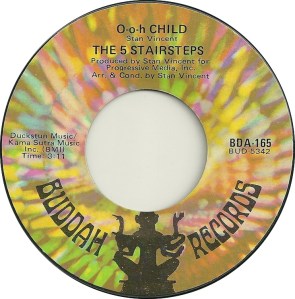
O-o-h child

the-5-stairsteps-ooh-child-1970-6


A Friday, Fleet Street, and a flow

of men and women power-dressed

and knocking off for weekends

in the rolling Cotswold hills.


And me, who never had a proper job at all,

now gazing over hipster latte

at the stripey men and at the women in stilettos

as the next song in the café starts.


A blast of brass and then a slinky groove,

a woman’s warming voice intoning to her child

that things will soon get easier, that life will brighten

in the darkness of their struggle to survive.


The suits and the stilettos pass, but in my mind

I see the starving child and hear her momma’s words,

their chances less than average of finding

ease and sunlight on the lethal streets.


The world still fortified against their kind,

designed by men in suits

and ladies in stiletto heels.

Stan Lewis, 1927-2018

42560003.JPG

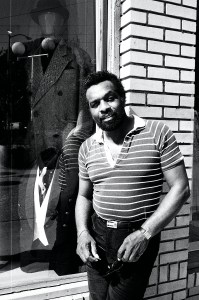
In southern soul news: I confess I only just registered that Jewel/Paul/Ronn owner and Shreveport legend STAN LEWIS passed away a month ago.

Here’s a great shot my pal Muir Mackean snapped of Stan outside his record store, on the 1985 travels that produced (the newly-reissued) Say It One Time For The Brokenhearted… more detail at https://www.offbeat.com/news/stan-lewis-obituary/

Bearsville 1971

Bearsville ad 1971.jpg

From my Small Town Talk:

Less supportive [of Todd Rundgren] by this point was Michael Friedman, who was nurturing a new Bearsville artist named Jesse Frederick. “Todd didn’t appreciate anything, and I’d really stuck my neck out for him,” Friedman says. “I think he felt that I’d deserted him for Jesse, but I stopped being interested because he was pissing people off and I was putting my name on it. He was a good engineer, but I preferred John Simon’s productions. With Todd, everything was sort of molded after the Who and the British sound, which was a much harsher sound than the funky Southern blues style the Grossman artists were involved with.”

More appreciative than Rundgren, Frederick moved into Friedman’s house in Shady and began rehearsing for an album made at the same Nashville studio where Great Speckled Bird had been recorded. 1971’s Jesse Frederick—rootsier and more soulful than The Ballad of Todd Rundgren, though hardly as original—was the first Bearsville album released under the label’s new Warners deal, while the second was a soft-rock effort by three long-haired Christians calling themselves Lazarus, produced at Bearsville by Peter Yarrow.

The third in the Reprise 2000 series—not counting reissues of Rundgren’s first two albums and of Jesse Winchester—was by eccentric Los Angeles duo Halfnelson, produced by Rundgren after he’d been introduced to them by Miss Christine. When Grossman suggested they rename themselves the Sparks Brothers, Ron and Russ Mael reluctantly compromised on Sparks, though success only arrived when they later signed to Island in London.[1]

[1] Following the 1971 release of Halfnelson, Miss Christine left Rundgren for Russ Mael, the more conventionally handsome of the two Maels. She was the subject of the Flying Burrito Brothers’ unflattering “Christine’s Tune’ and a member of Frank Zappa’s protégées/nannies/groupies Girls Together Outrageously. In November 1972 she died of a heroin overdose.

Say it again: the return of my Country Soul tome

Say It One Time42780016

The author copies of BMG’s “30th Anniversary” edition of my first book just showed up, complete with a foreword by country-soul king William Bell (right) dozens of previously-unseen photos taken in 1985 by my accomplice Muir Mackean. Here are the first few paras of the new introduction I wrote for it…

NAMED AFTER an extemporary yelp in the fadeout of Kip Anderson’s bereft 1968 single “I Went Off and Cried,” Say It One Time for the Brokenhearted was my first book. Revisiting it for the second time in 30 years, it feels, in places, as callow and earnest as I was myself at age 26, when I wrote it. I’d retroactively fallen in love with a sub-genre of American popular music that barely had a name, and I was close to evangelistic in my desire to turn people on to it.

The book’s original 1987 subtitle was The Country Side of Southern Soul, its cover sporting an awkward splice of a tuxedoed Ray Charles wearing a Stetson hat. (Tuxedo = soul, Stetson = country: you get the drift.) Brother Ray had, of course, been one of the prime movers in bringing black and white music together—he followed up his groundbreaking Modern Sounds in Country & Western Music albums from 1962 with the even more explicitly titled Country & Western Meets Rhythm & Blues, a.k.a. Together Again, in 1965—but not even he used the term “country soul,” which became part of the revised subtitle for Say It’s 1998 reissue and stays in place for this updated edition. I’m fairly sure I first encountered the phrase in Charlie Gillett’s groundbreaking history The Sound of the City (1970).

As I now look back to the early 1980s, when I first wrote about music for the NME, I ask myself why “country soul” got under my skin to such a degree that I decided to write a whole book about it. Naturally I loved the music, but there was more to it than that: something poetic, something almost mystical. Learning, as a schoolboy, that Aretha Franklin had recorded her breakthrough Atlantic single “I Never Loved a Man”/“Do Right Woman, Do Right Man” in a tiny studio in (of all places) Alabama—engineered, moreover, by a local white man named Rick Hall—gave me a thrill and instilled a curiosity that led me on a long and winding journey to—well, the very studio where Franklin made that record…

Don’t delay: Buy Say It One Time for Brokenhearted here…

hate again

33ED782A-B1F4-42CD-85A4-E703CE9D8227_w1023_r1_s.jpg

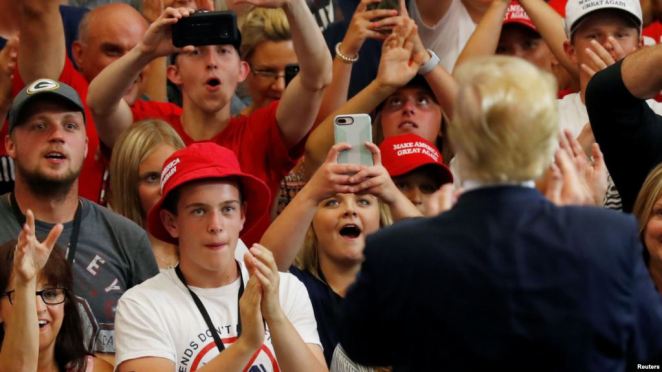
Ahead of the POTUS’ UK visit next week, a limey snowflake writes…


The massed white faces in the blood-red caps

are what the monster sees and what he needs to feed,

but still I ask myself if they believe or merely

blind themselves to creeping evil and to cruelty

they never would have countenanced before.

Are these God-fearin’ folks the enemy

and must I hate them as they hate the likes of me?


For in the end I’m unconvinced they want

the opposite of what I want.

Without the monster stoking fear

they would not sneer

at children torn from Mama’s arms

and would not harden like Good Germans

laughing at old pelted Jews.


If we could talk, not be transfixed

by terror of the Other,

we might see instead we are

a single species in the stars.


I fear it is too late, for they are drunk on hate,

with little left to lose and limitless supplies

of folks who aren’t like them to vilify.

John Niven’s Band classic: A foreword

The-Band-Music-From-The-Big-Pink-CD34837367_595058980849658_1934192234891051008_n

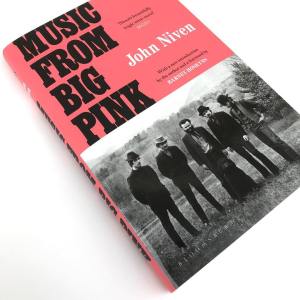
Bloomsbury are publishing a new edition of John Niven’s brilliant 33 1/3 novella about The Band’s debut album Music from Big Pink. I was very honoured by John’s asking me to write a foreword for it. Here it is…

THE FACT THAT John Niven was just two years old in 1968 – the year in which The Band’s Music from Big Pink was released – only makes his 2005 novella about the album’s inception and germination the more remarkable.

As someone who’d not only been obsessed by The Band since 1973 but had moved a young family to Woodstock largely on the strength of that obsession, I read Niven’s boldly unorthodox contribution to the excellent 33 1/3 series in a state of mesmerized disbelief that a thirtysomething Scotsman could, with such uncanny accuracy, catch the heady geist of that late ’60s zeit.

It was as if the former Wishing Stone – and future author of the caustic Kill Your Friends, the bestselling novel about his coke-crazed days as a London A&R man – had time-travelled back to Woodstock’s Tinker Street and infiltrated the “scene” that coalesced around the demurring Bob Dylan and his musical henchmen the Hawks. What supernatural deal had he struck to pull this off, and which literary devil had he struck it with?

A prosaic answer would point to the telling of The Band’s near-tragic story through the eyes and ears of drug dealer Greg Keltner. This device instantly demystified the curated sainthood of the Hawks/Band as forefathers of back-to-the-land Americana – mystic bumpkins with Homburgs and mandolins. From the moment we first meet Rick (Danko) and Richard (Manuel) in Niven’s story, there’s no mistaking their priorities: drugs, girls, and music, in that order. Which takes nothing whatever away from the magical music they made.

Keltner, who hails from Ontario like four-fifths of the Hawks/Band, is a somewhat feckless but endearingly poetic soul. True, he scores his dope from “Fifth Floor Dave” in the scuzzy East Village, but he quickly gets the point of Woodstock, the tiny Catskills town to which so many dropout boys and girls are beating a path in the summer of 1967. He also gets the point of the Hawks/Band, responding sensitively and meaningfully to the lovely songs he hears in the squat West Saugerties box known as Big Pink – as he does, still more incredulously, to the soulful woe and funky exhilaration of Music from Big Pink itself.

Keltner may be a rock’n’roll parasite but he is not a heinous dude. Plus we know he’s going to wind up broken and desolate in 1986, the year of Richard Manuel’s wretched death. The loose stoner flow of his narrating voice is the perfect medium for depicting the unsteadiness of Woodstock’s bucolic dysfunction in that 1967-69 period, hinting strongly as it does at Niven’s saturation in the more gonzoid strains of 20th Century American prose from the Beats to Pynchon to the so-called “Noise Boys” (Bangs, Tosches, Meltzer) of ’70s rock journalism – and snaring the disorienting vibe of a time and place in which everyday hedonism is evolving a little too rapidly.

I have no idea whether Rick or Richard would have recognized their lives in these pages, but then nor do I have any idea whether Robbie or Levon or Garth even read Niven’s novella. I do know that Greil Marcus, whose chapter about them in his sacred Mystery Train (1975) framed and explained most of what I felt about The Band, was as astonished by the book as I was, rightly acclaiming it as “an amazing piece of work”.

Keltner, in a sense, speaks for every besotted Band fan as he seeks to understand how these five men – these musical brothers – transcended their rather quotidian apprenticeship with Ronnie Hawkins to craft two of the most special records made in the name of “rock”. Espousing half-hearted songwriting aspirations of his own, Greg swiftly abandons them on hearing an acetate of Music from Big Pink. Like Al Kooper and Al Aronowitz in their early Rolling Stone pieces about them – and like the group’s entranced British disciples Eric Clapton and George Harrison – he understands instinctively that The Band has tapped into something altogether deeper than rock bombast or singer-songwriter over-sensitivity. “Now I knew, I really knew,” he confesses, “that Richard – and Rick, Levon, Robbie, Garth – they were a different order of human being from me.”

If there’s something Zelig-like about the novella’s serendipities – the chance encounters with Dylan, his crony Bob Neuwirth and his manager Albert Grossman, even with Lou Reed – they permit perfect cameos from these enigmatic characters. The drawling Arkansas poetry of Levon Helm’s speaking voice is expertly replicated; so is the aloof coolness of guitarist and principal songwriter Robbie Robertson. There’s also the gauzy presence of love interest Skye, a bewitching sprite who distils the appeal of so many liberated late ’60s girls – and who is bedded by the insatiable Rick before Greg can even get near her.

It should be no great surprise that Niven’s next work of “fiction” was the lacerating black comedy of Kill Your Friends. Certainly he was under no illusion that late ’60s Woodstock represented any kind of valid countercultural utopia.

“It seems to me it went fairly quickly from being the hippest place you could go to being almost Touristville,” he said when I talked to him for my Woodstock/Bearsville history Small Town Talk (2016). “It was already becoming a caricature of what it had been. A lot of the people were quite troubled, so there was this notion that ‘If I put myself in some kind of bucolic surrounding, things will get better’. But changing your locale doesn’t change what’s going on inside you.”

Yet Niven’s remarkable book is a testament to the fact that Woodstock’s “locale” did change the Hawks/Band – just as it profoundly altered the course of North American music.
Only disconnect: Jaron Lanier in London

IMG_3010IMG_3009

A rare visit to our capital by the brilliant Jaron Lanier, in conversation in the wonderful (and appropriate) Marx Memorial Library with dapper Idler host Tom Hodgkinson (centre) and trenchant Guardian columnist John Harris (left). Lanier brought, and played (thrillingly), two of his obscure wind instruments and addressed the main points from his brand-new Ten Arguments for Deleting Your Social Media Accounts Right Now. He is a genuinely fascinating Silicon Valley maverick and I urge you to read all his books. He and his like may be all that stand between us and a dystopian hi-tech nightmare of total control and dehumanisation. (N.B. the Socialist Society banner below was apparently woven by William Morris and his son…)

IMG_3011

All the major dudes

IMG_2984

Calling all dudes ‘n’ dudesses: today is publication day for the U.S. edition of Rock’s Backpages’ truly bodacious STEELY DAN anthology. Rather neatly, it’s published by Overlook, named after the famous mountain that overlooks Woodstock… where D. Fagen, Esq. keeps a country residence.